Measure the complete contents
Share actual dimensions, weight, orientation and clearance so an existing mold or custom structure can be reviewed against the real pack.
 BAOYUECAN MAKING
Request a quote ↗
BAOYUECAN MAKING
Request a quote ↗
Dry snacks · Nuts · Spices · Herbs
Review the dry product, inner barrier, fill volume, closure and destination requirements before choosing an outer tin and printed finish.
Review a dry-food tin ↗This page covers dry contents only. An inner bag, wrap, liner or project-specific coating may be required. Supplier reports support named samples and do not certify every finished pack.
Nuts, dried fruit and snacks
Fill volume, oil content, piece size and the primary inner pack determine useful capacity and handling.
Custom nut tin packaging and dried fruit tin packaging should begin with the real product, target weight, bulk density, inner bag or wrap and expected headspace. Dry contents can vary substantially in volume even at the same net weight. The outer tin supports presentation and reuse, while the complete inner pack controls the product-contact and shelf-life requirements.
A snack tin packaging manufacturer can review round, square, rectangular, hinged, lift-off or special-shaped structures. Custom popcorn tins wholesale projects and premium food gift tin packaging may use larger volumes, multiple flavors or seasonal artwork. Quantity per design and packing method should be specified before mold and price comparisons.
Spices, herbs and saffron
Powders, flakes, dried herbs and high-value spices need a defined product-contact route and filling plan.
Custom spice tin packaging, herb tin packaging and a seasoning tin manufacturer request should identify whether the product is powder, whole spice, flakes or a sealed retail unit. An inner bag, pouch, liner or project-specific coating may be required according to the contents, filling method, shelf life and destination requirements.
Custom saffron tin packaging often uses a small presentation format around a sealed inner pack. The buyer should provide the inner container or pouch dimensions, target quantity, tamper-evidence approach, labeling and market. Baoyue can develop the outer tin and decoration without claiming that one generic material system suits every spice or market.
Evidence and RFQ
A supplier report supports named samples; it does not replace project approval for the complete pack.
Selected tinplate, ink and coating reports can be reviewed against the proposed specification. Their relevance depends on the actual material, decoration, direct or indirect contact route, inner pack, end use and destination market. No blanket claim is made for every finished food tin.
Send the dry product type, inner-pack dimensions, target fill and volume, preferred shape, quantity per artwork, insert or divider needs, destination, labeling requirements and schedule. Representative packed samples should be used to check capacity, closure, appearance and transport packing before mass production.
Structure, print and packing
The product dimensions, content arrangement, insert, opening, decoration, quantity, export packing and destination market should be reviewed as one manufacturing brief.
Share actual dimensions, weight, orientation and clearance so an existing mold or custom structure can be reviewed against the real pack.
Lift-off, hinged, sliding, magnetic and special-shaped routes create different access, display and packing requirements.
CMYK, spot color, metallic effects, matte or gloss varnish and selected embossing depend on geometry, forming areas, quantity and artwork.
Existing Baoyue references
These public products demonstrate format, opening and presentation directions. Final application suitability is confirmed against the buyer's measured contents and specification.
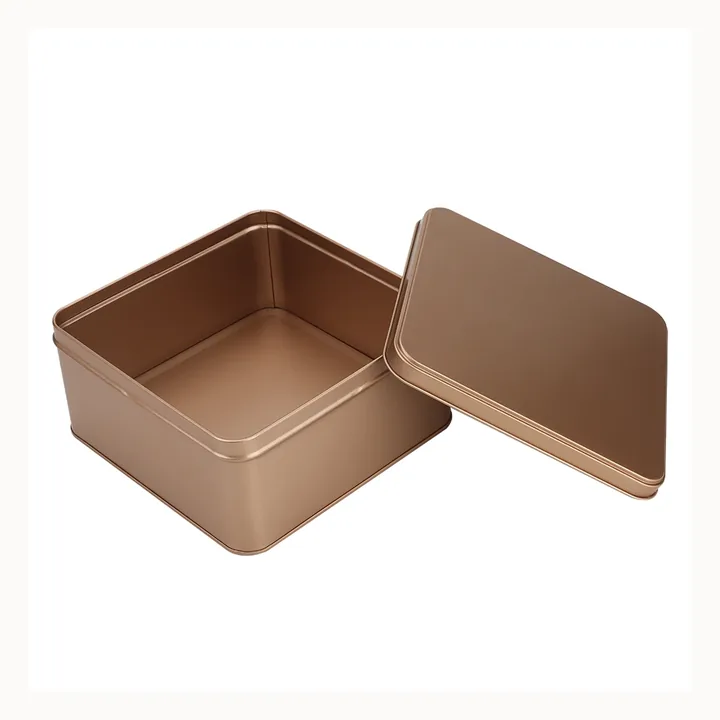 Square food format
A square reference for discussing bagged nuts, dried fruit, snack assortments and internal dividers.
Specifications & pricing ↗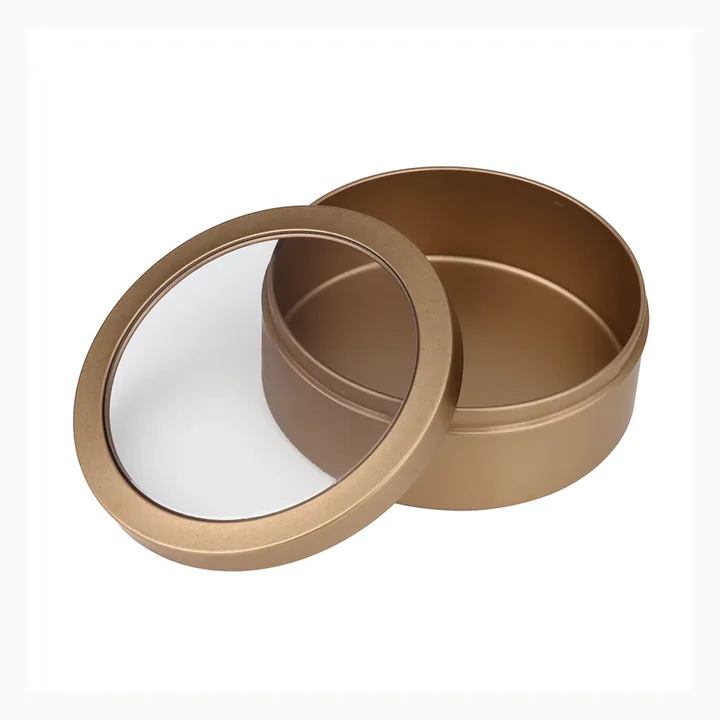 Round display
A round display direction for evaluating product visibility, inner packing and a dry snack gift presentation.
Specifications & pricing ↗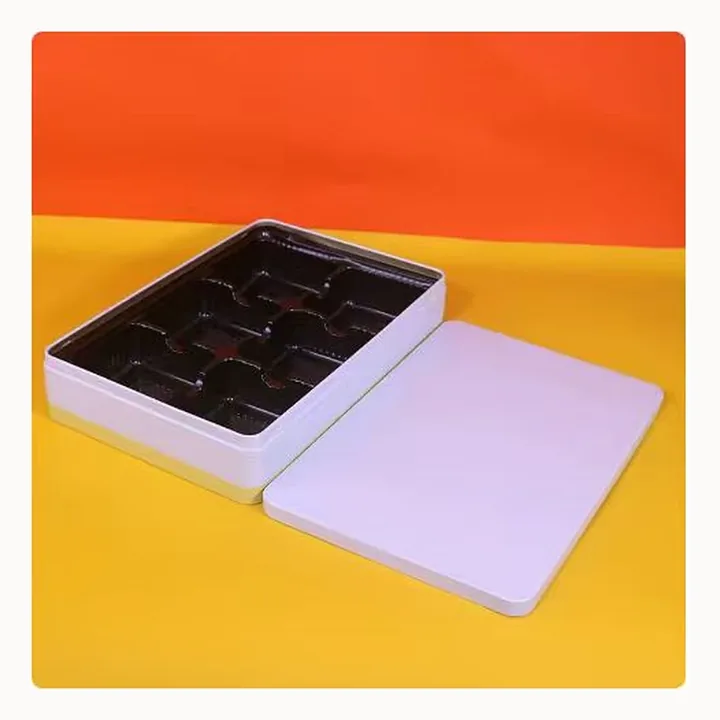 Large assortment
A broad rectangular format for multi-flavor snack gifts, inner bags, trays or layered assortments.
Specifications & pricing ↗Evidence and approval
Selected supplier-side tinplate, printing-ink and coating reports can support a project document review. Relevance depends on the actual material system, decoration, end use and destination-market requirements.
The buyer should identify product-contact, restricted-substance, labeling, transport and retail requirements before material and artwork approval.
Review Baoyue's current tinplate material reports, then request the document set needed for the selected specification.
Practical questions
Clear product and market information protects both the design intent and the manufacturing decision.
The preferred route is to define an appropriate inner bag, wrap, liner or validated contact system. Product, filling, shelf life and destination requirements must be reviewed for the complete pack.
Provide target weight, bulk density, piece size and inner-pack details. A representative fill test is more reliable than choosing a tin from net weight alone.
Small outer tins can be reviewed around a sealed inner pack, label, quantity, artwork and destination requirements. Existing molds are checked against the real packed dimensions.
No. Reports apply to named samples and test conditions. Relevance must be matched to the actual tinplate, ink, coating, inner pack, end use and market.
Send product type, inner-pack dimensions, fill target, preferred shape, quantity per design, destination, artwork status, documentation needs and schedule.
A useful first message