Match an existing mould
Send the filled bag dimensions, expected quantity and lid preference so an existing canister can be checked for fit.
Request a mould shortlist ↗ BAOYUECAN MAKINGRequest a quote ↗
Coffee packaging · Fit the product first
For U.S. coffee buyers, the useful question is not only how the tin looks. The closure, inner bag, fill weight, shelf handling and repeat-order specification all need to work before artwork is approved.
Discuss the real brief ↗Baoyue manufactures printed tin packaging in Dongguan, China for export projects. Existing and custom mold directions, clamp, plug and other lid structures, and supporting inserts can be reviewed. Freshness performance depends on the complete coffee packaging system and must be tested; no airtight claim is made without a confirmed structure and test basis.
For roasted beans, ground coffee or coffee gifts, tell us whether the coffee is in a sealed inner bag. Fill weight alone cannot determine the required tin size.
Send the filled bag dimensions, expected quantity and lid preference so an existing canister can be checked for fit.
Request a mould shortlist ↗Specify the intended packaging system and branding. Gas release, freshness and sealing need to be validated with the actual coffee pack, not inferred from the outer tin.
Discuss custom dimensions ↗What to decide first
Beans, ground coffee, pods and gift assortments each place different demands on capacity, access and internal packaging.
Weight alone is not enough. Bean density, grind, inner bag and headspace affect the volume, so a physical fill test is more reliable than selecting a tin from a photograph.
A wire clamp creates a recognisable action, while other lid types may suit different filling or retail needs. The lid, gasket or liner and inner bag must be evaluated together.
Grip, opening clearance, label hierarchy and surface durability matter when a coffee tin is handled every day and kept after the first fill is gone.
Project development
A coffee tin brief should identify beans or ground coffee, the primary inner barrier, target fill, desired opening style, artwork, order quantity and destination. These facts guide the first structural recommendation and help avoid choosing a mold that looks right but packs badly.
Existing round and square references can shorten the structural search. Where a distinctive proportion or mechanism is necessary, a custom mold can be evaluated. The development path is confirmed after drawings, tolerances and manufacturing feasibility are reviewed.
Printed metal offers a broad branding surface. CMYK, metallic ink, matte or gloss varnish and embossing can be combined selectively, while inserts or dividers can organise coffee accessories and gift sets.
Claims about freshness, degassing or airtightness require evidence from the actual structure and packaging combination. Baoyue can help turn a design direction into a sample, but the approved specification must come from testing the complete pack.
Existing Baoyue references
These are current product references, not promises that one format fits every project. Open a detail page for the supplied specification and reference price, then ask for confirmation against the actual brief.
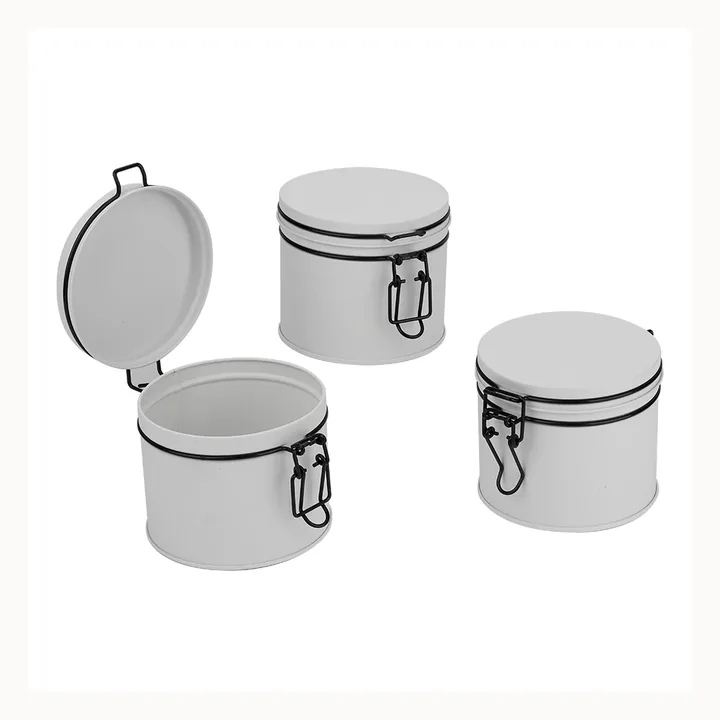 Round
RoundReusable round canister with wire clamp closure. Suitable for coffee, tea, cocoa and dry-food gifting.
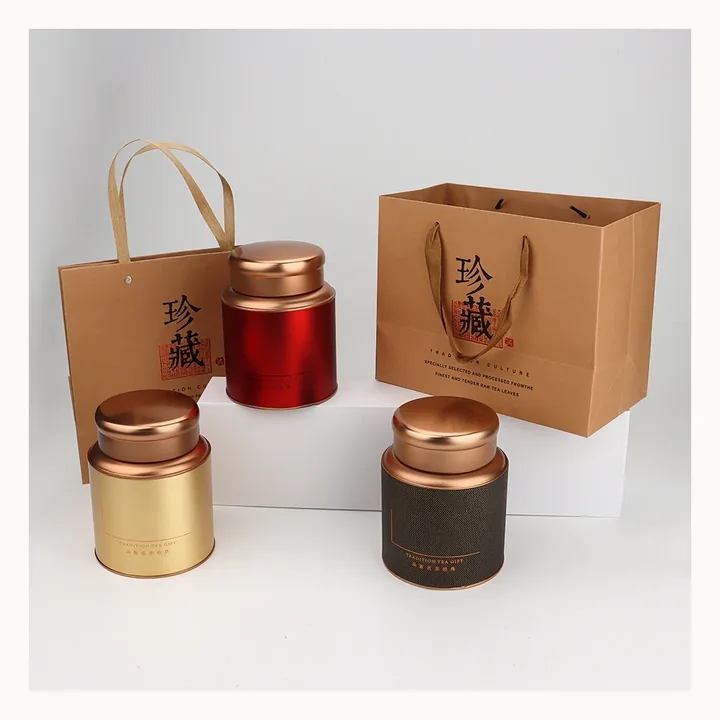 Round
RoundDecorative cylindrical canister with raised neck and fitted cap. Suitable for tea, botanical infusions and premium dry-food gifts.
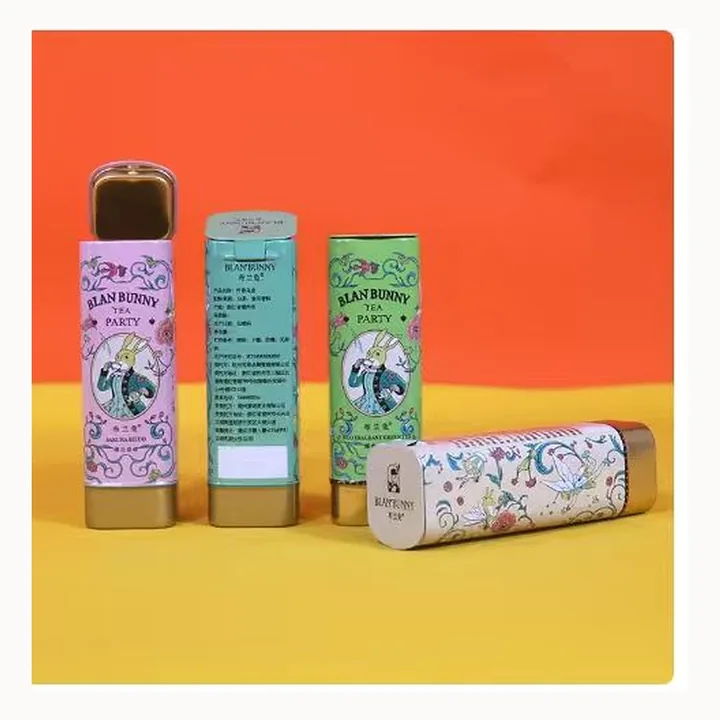 Rectangular
Tall narrow body with compact square footprint. Suitable for tea, herbs, spices and compact premium gifts.
Practical questions
Clear inputs reduce avoidable mold, artwork and packing revisions. Answers below describe the review process without inventing project guarantees.
A round wire-clamp reference is available and other structures can be reviewed. The required diameter, height, liner or gasket and inner coffee pack should be confirmed before quotation.
No. Airtight performance depends on the closure, gasket or liner, seams, tolerances and the rest of the packaging system. It should be verified using the intended coffee and packing method.
Existing mold sizes can be reviewed first. Custom mold development, CMYK or metallic printing, matte or gloss varnish and embossing are available for feasibility review.
Send the coffee type, target fill, inner bag dimensions, preferred lid, quantity, artwork status and destination. That information is enough to begin a practical mold and structure review.
A useful first message